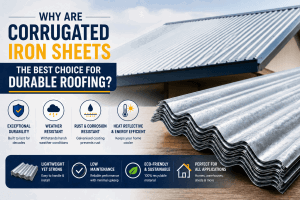
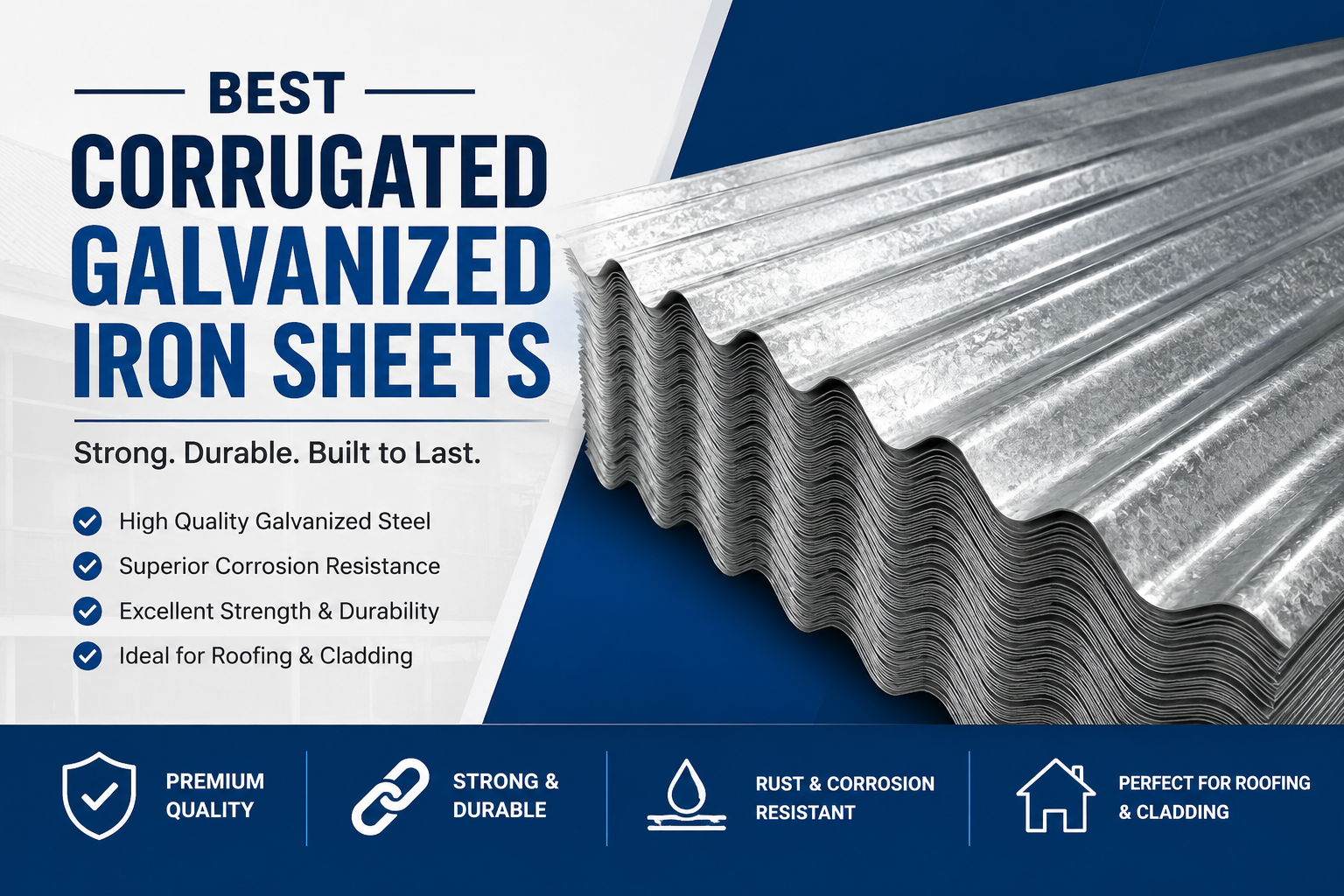
Corrugated galvanised iron is one of the most durable, weather-resistant, and cost-effective roofing materials available, offering a unique combination of structural strength, corrosion resistance, and longevity that few alternatives can match. The characteristic ridged profile of corrugated iron sheets is not just an aesthetic choice. The corrugation itself dramatically increases tensile strength, allowing thinner, lighter sheets to span greater distances and bear greater loads than flat metal of the same thickness.
For residential, agricultural, industrial, and commercial buildings, corrugated galvanised iron has earned its reputation as a go-to roofing solution over more than 150 years of widespread use worldwide.
What Makes Corrugated Galvanised Iron Different?
GI corrugated sheets are steel sheets coated in a layer of zinc through a process called hot-dip galvanization. The zinc coating acts as a physical and electrochemical barrier between the steel and the atmosphere, preventing rust and corrosion even in wet, salty, or humid environments.
The corrugated profile is formed by cold-rolling the galvanized sheet into a wave pattern. This wave profile increases the sheet's load-bearing capacity and rigidity without adding weight, giving corrugated galvanised iron its distinctive strength-to-weight ratio advantage over other roofing materials.
The result is a roofing panel that is light enough to install without heavy equipment, strong enough to withstand significant wind and snow loads, and protected enough to last decades with minimal maintenance.
The Numbers Behind Metal Roofing's Growing Dominance
The roofing industry is voting with its purchases.
According to Verified Market Research, the global metal roofing market was valued at $5.58 billion in 2024 and is projected to reach $7.89 billion by 2032, growing at a CAGR of 4.88%. Corrugated sheets are identified as the second most dominant product segment, particularly valued for their cost-effectiveness, ease of installation, and resilience in agricultural, rural, and industrial settings.
According to Malco Tools, the share of residential metal roofing in the United States rose from 12% in 2019 to 17% in 2021 and has continued to increase, driven by growing recognition of metal roofing's durability and long-term value compared to traditional asphalt shingles.
What are the Key Benefits of Corrugated Galvanised Iron Roofing?
1. Long Lifespan
A properly installed galvanised steel roofing sheet can last 40 to 70 years, far outlasting the 15 to 25-year lifespan of asphalt shingle roofs. This makes GI roofing one of the best lifetime-value roofing investments available.2. Exceptional Weather Resistance
The zinc coating on corrugated iron sheets provides outstanding resistance to rain, humidity, wind, and UV exposure. Hot-dip galvanized coatings are rated for decades of protection, with the zinc layer self-repairing minor scratches through cathodic protection.3. Lightweight Structure
Despite its strength, corrugated galvanised iron is significantly lighter than concrete tile, clay tile, or slate roofing. This reduces the structural load on walls and foundations, making it suitable for both new construction and re-roofing over existing structures.4. Fire Resistance
Metal roofing is non-combustible, earning it Class A fire resistance ratings that make it a preferred material in fire-prone areas and a potential contributor to lower insurance premiums for property owners.5. Low Maintenance Requirements
Unlike timber, clay, or asphalt roofing that requires regular sealing, painting, or replacement of individual components, GI corrugated sheets need only periodic cleaning and occasional inspection of fasteners and flashings to maintain performance.6. Environmental Sustainability
Galvanised steel is fully recyclable at the end of its service life. Many corrugated metal roofing panels are manufactured with significant recycled steel content, contributing to lower embodied carbon compared to other roofing materials.
Corrugated Galvanised Iron vs. Other Roofing Materials
This comparison highlights how corrugated galvanised iron performs against common roofing alternatives across every key category.
| Feature | Corrugated GI | Asphalt Shingles | Concrete Tile | Colorbond Steel |
|---|---|---|---|---|
| Lifespan | 40 to 70 years | 15 to 25 years | 30 to 50 years | 40 to 70 years |
| Weight | Very light | Light | Very heavy | Very light |
| Corrosion Resistance | Excellent (zinc coat) | Poor | Good | Excellent (paint coat) |
| Fire Rating | Class A | Class C | Class A | Class A |
| Cost | Low to mid | Low | Mid to high | Mid to high |
| Recyclability | 100% | Low | Low | 100% |
What are the Common Applications for GI Corrugated Sheets?
Corrugated galvanised iron is used across an exceptionally broad range of applications:
- Residential roofing: Particularly popular in rural and semi-rural settings, beach homes, and heritage-style buildings. Also gaining ground in urban residential projects seeking industrial or contemporary aesthetics.
- Agricultural buildings: Barns, sheds, equipment storage, and livestock shelters rely heavily on GI corrugated sheets for their durability and affordability across large roof spans.
- Industrial and commercial buildings: Warehouses, factories, retail buildings, and logistics facilities use corrugated metal roofing panels for their ability to span large structural bays without intermediate supports.
- Outbuildings and extensions: Garages, carports, garden rooms, and building extensions frequently use corrugated GI for its speed of installation and low cost.
How to Choose the Right GI Sheet for Your Project
Selecting the correct specification for your build depends on span requirements, environmental exposure, and structural load conditions.
| Specification | Options | Best For |
|---|---|---|
| Sheet thickness | 0.35mm to 0.80mm | Thicker for structural spans; thinner for light cladding |
| Corrugation depth | Standard (17mm) to deep (25mm+) | Deeper corrugations for wider spans and stronger loads |
| Zinc coating weight | Z100 to Z275 (g/m2) | Heavier zinc for coastal or high-humidity environments |
| Surface finish | Mill finish, pre-painted | Pre-painted for color and additional UV protection |
Are You Ready to Order? Talk to BobCo Metals
Choosing the right corrugated galvanised iron specification for your project requires knowing your span requirements, environmental exposure, and load conditions.
Our team can advise on the right thickness, zinc coating weight, and profile for your specific build, and supply cut-to-length sheets to reduce waste and simplify installation.
BobCo Metals supplies a comprehensive range of corrugated iron sheets, galvanised steel roofing sheets, and corrugated metal roofing panels for residential, commercial, agricultural, and industrial applications. Contact BobCo Metals today to discuss your roofing project and get a competitive quote on quality GI corrugated sheeting. You can also call us directly at 800-262-2605.
Frequently Asked Questions (FAQs)
- 1. How long does corrugated galvanised iron roofing last?
With correct installation and routine maintenance, corrugated galvanised iron roofing lasts between 40 and 70 years. The actual lifespan depends on the zinc coating weight, local climate conditions, and the quality of the installation and flashings. - 2. Can corrugated GI sheets be used in coastal environments?
Yes, but a heavier zinc coating is recommended for coastal and high-humidity environments where salt air accelerates corrosion. Specify a minimum Z275 coating weight (275g/m2 of zinc) for buildings within close proximity to the ocean or in tropical climates. - 3. What is the difference between corrugated galvanised iron and Colorbond steel?
Both are galvanised steel products with similar structural performance. Colorbond adds a pre-painted finish that provides additional UV and weather protection along with color choice. Corrugated GI in mill finish is lower in cost; Colorbond commands a premium for its aesthetics and extended surface durability. - 4. How is corrugated galvanised iron installed?
GI corrugated sheets are fixed to purlins or roof battens using self-drilling roofing screws with neoprene washers. Sheets overlap at the corrugations on the sides and by a minimum of one and a half corrugations at the ends. Proper installation of flashings at ridges, hips, valleys, and penetrations is critical to weatherproofing. - 5. Are corrugated metal roofing panels noisy in the rain?
Uninsulated corrugated metal roofing can be louder during rain than insulated or mass-loaded materials. Adding insulation batts or a sarking membrane beneath the sheets significantly reduces noise transmission and also improves thermal performance. - 6. What thickness of GI sheet is right for my roof?
0.47mm is the standard residential thickness for most applications. 0.55mm and above are recommended for wider purlin spacings, high-wind areas, or buildings that must meet stricter structural loads. BobCo Metals can advise on the correct specification for your project.