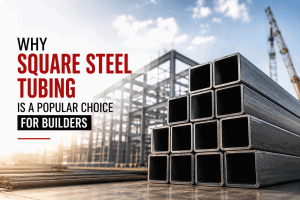
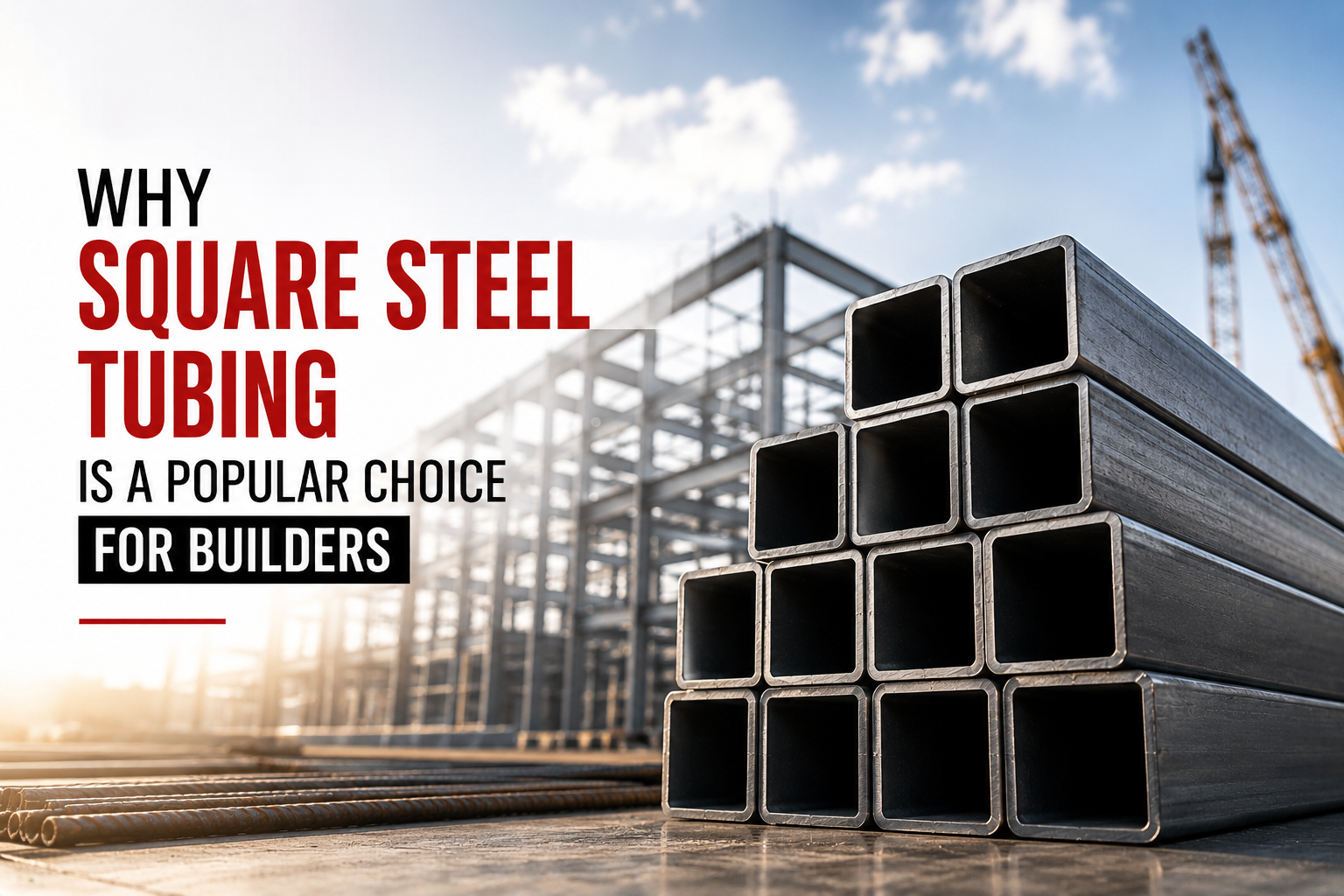
Steel square tubing is a popular choice for builders because it delivers exceptional structural strength relative to its weight, offers straightforward connections for welding and fastening, and provides clean, uniform dimensions that simplify design and fabrication across an enormous range of projects.
From structural framing and equipment fabrication to fencing, furniture, and architectural features, square steel tube shows up everywhere builders need a material that is strong, predictable, and easy to work with.
According to Fact.MR's Steel Tubes Market Report, the global steel tubes market is valued at $99.26 billion in 2025, with welded steel tubes, the category that includes most square structural tubing, accounting for around 70.5 percent of the market due to their cost-effectiveness and versatility across construction, automotive, and general engineering applications.
The Scale of Demand Tells the Story
Square tubing is not a niche product. It is a core component of one of the largest material categories in global manufacturing.
In 2023, steel accounted for more than 81 percent of the total sheet metal market revenue, with building and construction being the leading end-use segment, according to the Sheet Metal Market analysis. Square and rectangular structural tubing lies at the heart of this segment.
When the majority of an industry this size runs on welded tube products, that tells you something about how foundational the format has become.
What Makes Square Tubing Different from Round Pipe
The geometry itself is the starting point for understanding why builders reach for square tubing so often.
Flat surfaces for connections
Square steel tube provides flat faces on all four sides, making it dramatically easier to weld, bolt, or clamp other components than round pipe, which requires curved cuts or specialized fittings for flush connections.Predictable load distribution
The uniform cross-section of hollow square tube distributes loads evenly along its length, which simplifies structural calculations for engineers and builders working with standardized specifications.Efficient stacking and storage
Square profiles stack and store more efficiently than round stock, reducing wasted space in shop layouts and transport, which translates to real cost savings at scale.Visual consistency
For architectural and furniture applications, the clean lines of square metal tubing read as more modern and intentional than round tube in many design contexts.
Common Applications for Steel Square Tubing
| Application | Why Square Tubing Is Used |
|---|---|
| Structural framing | Flat surfaces simplify connections, predictable load behavior |
| Equipment frames and machinery bases | Easy to weld brackets, mounts, and panels directly to flat faces |
| Fencing and gates | Clean appearance, strong corner connections |
| Furniture and fixtures | Modern aesthetic, easy to join at right angles |
| Trailers and transport equipment | High strength-to-weight ratio, simplifies chassis design |
| Architectural features | Consistent dimensions for railings, canopies, and supports |
Hollow Square Tube vs Solid Bar: When Each Makes Sense
This comparison comes up constantly for builders deciding between square steel tubing and solid square bar stock.
Hollow square tube offers significantly better strength-to-weight performance for most structural applications, since the material is distributed at the perimeter where it does the most work resisting bending forces. It is also generally less expensive per unit of length for equivalent outer dimensions, since less raw material is used.
Solid square bar becomes the better choice when the application involves significant machining, where removing material from the center of a tube could compromise structural integrity, or when the component needs to resist crushing forces from multiple directions rather than primarily bending loads.
For the majority of framing, fencing, and fabrication applications, hollow square tube delivers the performance builders need at a lower material cost, which is a major reason it dominates these categories.
Choosing the Right Wall Thickness and Size
Specification matters as much as material choice when it comes to square metal tubing, and getting it right avoids both overbuilding and underbuilding your project.
| Wall Thickness | Typical Applications |
|---|---|
| 14 to 16 gauge (thin wall) | Light fabrication, decorative elements, low-load furniture |
| 11 to 12 gauge (medium wall) | General fencing, gates, moderate structural framing |
| 3/16" to 1/4" (heavy wall) | Structural framing, equipment bases, trailer chassis |
| 5/16" and thicker | Heavy equipment, high-load structural applications |
Outer dimension selection follows a similar logic. Smaller profiles (1 inch to 2 inches) suit lighter framing and fencing, while larger profiles (3 inches and up) handle the structural demands of equipment frames and larger building components.
Grade Selection: ASTM A500 and Beyond
Most structural square steel tubing in North America is specified to ASTM A500, which covers cold-formed welded and seamless carbon steel structural tubing in several grades, with Grade B and Grade C being the most common for general structural applications.
Higher grades within A500 offer increased yield and tensile strength, which can allow for thinner wall specifications in applications where weight reduction matters without compromising load capacity. For most general construction and fabrication work, Grade B provides a reliable, cost-effective baseline that meets the structural demands of the vast majority of projects.
Why Sourcing Consistency Matters
Two pieces of square tubing with identical nominal dimensions can behave differently in fabrication if wall thickness or straightness varies between batches. For builders running production welding or precision fabrication, dimensional consistency directly affects fit-up time and finished quality.
Working with a supplier who maintains consistent inventory quality, accurate dimensional tolerances, and reliable availability across the sizes and grades you use regularly removes a variable that otherwise shows up as wasted time on the shop floor.
Source Steel Square Tubing from BobCo Metals
BobCo Metals supplies steel square tubing, hollow square tube, and square metal tubing across a full range of sizes, wall thicknesses, and grades for structural framing, equipment fabrication, fencing, and architectural projects.
Our team helps you specify the right dimensions and grade for your application and keeps consistent inventory so your projects do not stall waiting on material.
Visit BobCo Metals today to discuss your square steel tubing requirements and get a quote for your project.
Call us directly at 800-262-2605.
Frequently Asked Questions
- 1. What is the difference between square steel tubing and round steel pipe?
Square tubing has four flat faces that simplify welding and bolted connections, while round pipe has a curved surface that requires special fittings or curved cuts for flush connections. Square tubing also stacks and stores more efficiently. - 2. What grade of steel is used for square tubing?
Most structural square steel tubing in North America is specified to ASTM A500, with Grade B being the most common for general structural and fabrication applications due to its reliable strength and cost-effectiveness. - 3. Is hollow square tube as strong as solid bar?
For bending and structural loads, hollow square tube often provides better strength-to-weight performance than solid bar of the same outer dimensions, since material is positioned at the perimeter where it resists bending most effectively. - 4. What wall thickness of square metal tubing is best for fencing?
Fencing applications typically use 11 to 12 gauge square tubing, which provides sufficient strength for gate frames and fence posts while remaining cost-effective and manageable to weld and install. - 5. Can square steel tubing be welded easily?
Yes. The flat faces of square steel tubing make it one of the easier profiles to weld, since joints align cleanly without the curved cutting required for round pipe connections. - 6. What sizes does steel square tubing come in?
Common sizes range from 1 inch by 1 inch for light fabrication up to 8 inches by 8 inches or larger for heavy structural applications, with wall thicknesses typically ranging from 14 gauge to 1/2 inch or more. - 7. Is square steel tubing more expensive than round pipe?
Pricing is generally comparable for equivalent material grades and wall thickness, though square tubing's easier fabrication often reduces labor costs on projects involving multiple connections and joints. - 8. What industries use the most square steel tubing?
Construction and structural fabrication represent the largest use case, followed by equipment manufacturing, trailer and transport fabrication, fencing, and architectural applications including railings and supports.