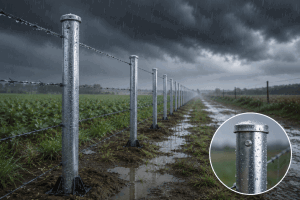
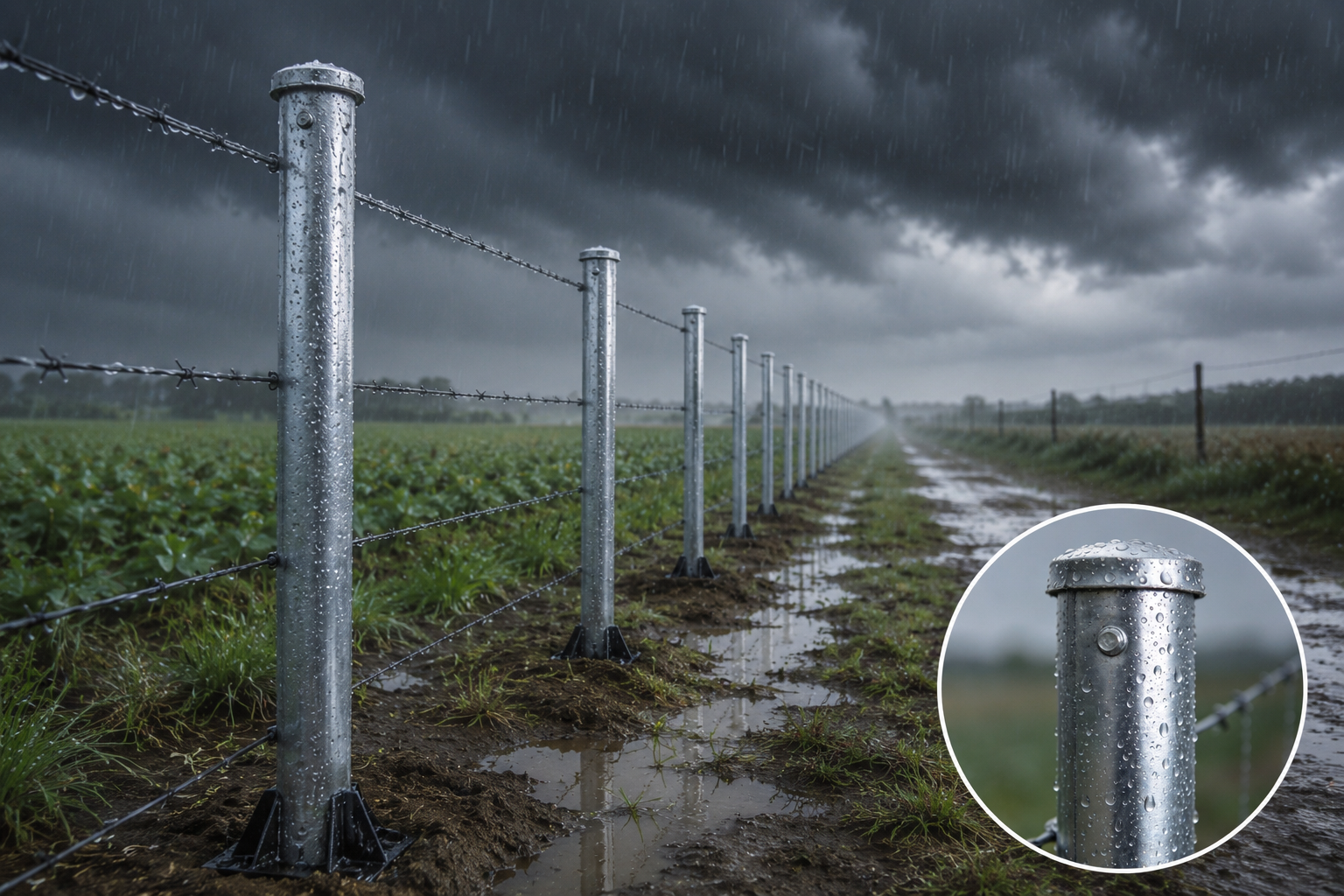
Galvanized steel fence posts are ideal for harsh weather conditions because the zinc coating applied during galvanization creates a corrosion-resistant barrier that protects the underlying steel from rust, moisture damage, and the freeze-thaw cycles that destroy untreated metal and wood posts over time.
Whether you are dealing with heavy rainfall, intense sun, coastal salt exposure, or harsh winters, galvanized posts hold up where other materials quietly fall apart year after year.
Why Fencing Material Choice Matters More Than People Think
A fence post failure is rarely dramatic. It is slow. A post rusts gradually at the ground line, weakens, and one day a section of fence simply leans or falls after a strong wind that, a year earlier, it would have handled without issue.
According to Straits Research's Agricultural Fencing Market Report, the global agricultural fencing market reached $31.72 billion in 2024, with metal fencing materials, especially galvanized and stainless steel, holding the largest market share due to their superior durability, tensile strength, and resistance to harsh weather conditions, pests, and fire hazards.
The Global Growth Insights' Agricultural Steel Wire Fencing analysis shows that the use of galvanized steel wire fencing has increased by approximately 52 percent due to its better rust resistance and durability in harsh weather conditions, with adopters reporting maintenance need reductions of nearly 40 percent compared to non-galvanized alternatives.
That maintenance reduction number is the whole story in one statistic. Less maintenance means fewer replacement posts, fewer repair callbacks, and a fence that actually looks the way it did when it was installed.
How Does Galvanization Actually Work?
Galvanization is the process of coating steel with a layer of zinc, most commonly through hot-dip galvanizing, where steel posts are submerged in molten zinc to form a metallurgically bonded protective layer.
This zinc layer protects the steel in two ways.
First, it acts as a physical barrier, preventing moisture and oxygen from reaching the steel surface directly.
Second, and more importantly for long-term durability, zinc provides sacrificial protection. If the coating is scratched or damaged, the surrounding zinc corrodes preferentially, protecting the exposed steel underneath until the zinc in that area is depleted.
This sacrificial property is why galvanized fence posts continue protecting against rust even after minor surface damage from installation, impacts, or normal wear, something painted or coated steel cannot replicate once the coating is breached.
Galvanized Steel Posts vs Other Fencing Materials
| Material | Weather Resistance | Maintenance Needs | Typical Lifespan |
|---|---|---|---|
| Untreated steel posts | Poor, rusts quickly | High, requires regular treatment | 5 to 10 years |
| Wood posts | Moderate, rot-prone | High, requires sealing/replacement | 10 to 15 years |
| Galvanized steel posts | Excellent | Low | 30 to 50+ years |
| Vinyl/composite posts | Good | Low | 20 to 30 years |
| Powder-coated steel | Good if coating intact | Moderate, vulnerable if scratched | 15 to 25 years |
The lifespan gap between galvanized and untreated steel alone makes the case for most applications, particularly anything installed in ground contact where moisture exposure is constant.
Where Galvanized Steel Posts Outperform in Harsh Conditions
1. Coastal environments
Salt air accelerates corrosion on untreated metal dramatically. Galvanized coatings, particularly heavier zinc coatings or duplex systems combining galvanizing with powder coating, significantly extend service life in these conditions.2. Freeze-thaw climates
Repeated freezing and thawing cycles cause untreated metal to crack and flake as trapped moisture expands. The continuous zinc barrier on galvanized posts resists this moisture infiltration at the surface level.3. High rainfall and humidity regions
Constant moisture exposure is exactly the condition galvanization is designed to handle, since the zinc coating prevents the steel from ever developing the surface rust that initiates deeper corrosion.4. Agricultural and livestock applications
Posts in pastures face not just weather but also constant ground moisture, animal contact, and minimal opportunity for maintenance access across large properties, making low-maintenance materials like steel posts for fencing especially valuable.
Hot-Dip vs Electro-Galvanized: Understanding the Difference
Not all galvanized coatings are equal, and this distinction matters when you are comparing metal fence posts from different suppliers.
Hot-dip galvanizing produces a thick, durable zinc coating, typically measured in ounces per square foot, applied by submerging the steel in molten zinc. This is the standard for fence posts intended for ground contact and long-term outdoor exposure.
Electro-galvanizing applies a thinner zinc layer through an electrochemical process, producing a smoother finish but significantly less corrosion protection. This is more commonly used for indoor applications or products where appearance matters more than long-term outdoor durability.
For fence posts specifically, hot-dip galvanizing is the appropriate standard given the ground contact and continuous outdoor exposure these products face.
Sizing and Specification Considerations
Choosing the right galvanized steel posts for your project involves more than just picking "galvanized" off a list.
Post diameter and wall thickness should match the fencing system's height and the loads it will bear, including wind loads for taller fences and impact loads for livestock applications.
Coating weight, often specified in ounces of zinc per square foot, determines how long the protective layer lasts before it begins to deplete. Heavier coatings cost more upfront but extend service life, particularly in harsh environments.
Post length needs to account for both the above-ground fence height and adequate below-ground embedment depth, which varies based on soil type and local frost line depth in colder climates.
Source Galvanized Steel Fence Posts from BobCo Metals
BobCo Metals supplies galvanized steel fence posts, galvanized fence posts, and a full range of steel posts for fencing in various diameters, wall thicknesses, and coating specifications for agricultural, residential, and commercial applications.
Our team helps you select the right post specification for your climate, soil conditions, and fencing system, so your investment holds up for decades rather than years.
Contact BobCo Metals today at 800-262-2605 to discuss your galvanized fence post needs and get a quote for your project.
Frequently Asked Questions (FAQs)
- 1. How long do galvanized steel fence posts last?
Properly hot-dip galvanized steel fence posts typically last 30 to 50 years or more, depending on coating weight, soil conditions, and environmental exposure, significantly outlasting untreated steel or wood alternatives. - 2. What is the difference between hot-dip and electro-galvanized fence posts?
Hot-dip galvanizing produces a thicker, more durable zinc coating suited for ground contact and long-term outdoor exposure, while electro-galvanizing produces a thinner coating better suited to indoor or lower-exposure applications. - 3. Are galvanized steel posts better than wood for fencing?
For weather resistance and longevity, yes. Galvanized steel posts resist rot, insect damage, and warping that affect wood over time, and typically require far less maintenance across their service life. - 4. Do galvanized fence posts eventually rust?
Galvanized coatings can eventually wear down, particularly at cut ends or damaged areas, but the sacrificial nature of zinc means the surrounding coating protects exposed steel for an extended period even after minor damage. - 5. Can galvanized steel posts be used in coastal areas?
Yes, and they are often the preferred choice for coastal fencing. Heavier galvanized coatings or duplex systems combining galvanizing with additional coatings perform especially well against salt air corrosion. - 6. What size galvanized post do I need for my fence?
Post diameter and wall thickness should be matched to your fence height and expected loads, including wind and, for agricultural applications, animal impact. A supplier can help match specifications to your specific fencing system. - 7. How deep should galvanized fence posts be set in the ground?
Embedment depth depends on post height, soil type, and local frost line depth, but a general guideline is setting at least one-third of the total post length below ground for adequate stability. - 8. Are galvanized steel posts more expensive than other fencing materials?
Galvanized steel posts often cost more upfront than wood or untreated steel, but their significantly longer lifespan and lower maintenance needs typically make them more cost-effective over the long term.