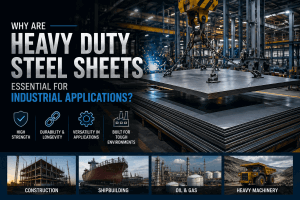
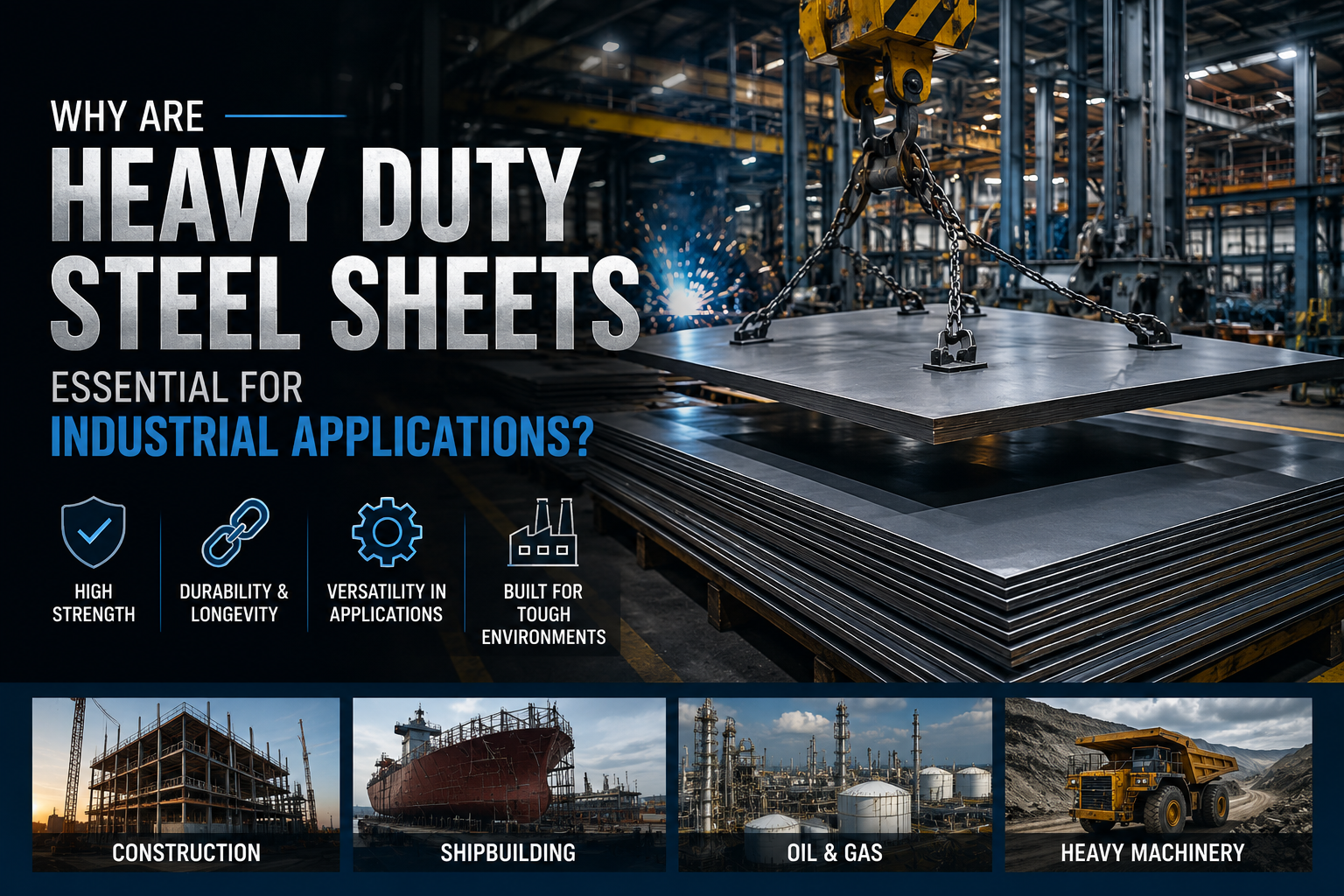
Heavy duty steel sheets are essential for industrial applications because they provide the structural strength, durability, and cost-efficiency required for everything from machinery frames and structural components to vehicle bodies, storage tanks, and heavy equipment fabrication. Few materials offer the same combination of tensile strength, formability, and value at scale, which is exactly why steel sheet remains the backbone material of industrial manufacturing worldwide, even as newer materials gain attention in specific niches.
The Scale of the Steel Sheet Industry Says It All
Sometimes the best way to understand why a material matters is to look at how much of it the world actually uses.
According to SkyQuest's Sheet Metal Market Report, the global sheet metal market was valued at $275.78 billion in 2024 and is projected to reach $533.18 billion by 2033, growing at a CAGR of 7.6 percent, with steel continuing to hold the largest share of the material segment.
Grand View Research's Sheet Metal Market Analysis shows that steel held over 81 percent of total sheet metal market revenue share in 2023, with the building and construction sector representing the largest end-use application and industrial machinery and automotive following closely behind.
When a single material commands over 80 percent of an industry that size, that is not a trend. That is infrastructure.
What Makes Steel Sheet "Heavy Duty"?
Not all steel sheets are created equal, and the term "heavy duty" refers to specific characteristics that distinguish industrial-grade material from lighter commercial or decorative sheets.
1. Thickness (gauge)
Heavy duty steel sheet typically refers to material in the range of 10 gauge (approximately 3.4mm) and thicker, up to plate thickness territory. This thickness provides the structural rigidity needed for load-bearing and high-stress applications.2. Tensile strength
Industrial steel grades are rated by their tensile strength, which determines how much load the material can withstand before deforming or failing. Higher tensile grades are used where structural integrity under stress is non-negotiable.3. Surface treatment and coating
Hot-rolled, cold-rolled, galvanized, and specialty-coated finishes each serve different industrial purposes, from corrosion resistance to weldability to surface hardness.
Common Industrial Applications for Heavy Duty Steel Sheets
| Application | Why Steel Sheet Is Used | Typical Specification |
|---|---|---|
| Machinery frames and enclosures | Structural rigidity, vibration resistance | Hot-rolled, 10 to 7 gauge |
| Storage tanks and silos | Corrosion resistance, weldability | Galvanized or coated steel |
| Vehicle and trailer bodies | Strength-to-weight balance, formability | Cold-rolled or high-strength low-alloy |
| Structural fabrication | Load-bearing capacity, weldability | Plate-grade steel, various thicknesses |
| HVAC ductwork and housings | Formability, corrosion resistance | Galvanized sheet |
| Agricultural equipment | Abrasion resistance, durability | Hot-rolled, higher gauge |
Hot-Rolled vs Cold-Rolled: Which Steel Sheet Do You Need?
This is one of the most common questions for anyone sourcing steel sheet for an industrial project, and the answer depends on your application's priorities.
1. Hot-rolled steel is produced at high temperatures and cools at room temperature, resulting in a slightly rougher surface finish but greater material flexibility and lower cost. It is the go-to choice for structural applications where surface finish is not critical and cost efficiency matters, such as construction beams, agricultural equipment, and heavy machinery frames.
2. Cold-rolled steel is processed further at room temperature, producing a smoother surface finish, tighter dimensional tolerances, and improved mechanical properties. It costs more than hot-rolled but is the better choice for applications requiring precise tolerances, better surface finish for coating or painting, or enhanced strength characteristics.
For most heavy duty industrial fabrication, hot-rolled steel sheet is the practical default. Cold-rolled becomes the right choice when precision and finish quality move up the priority list.
Galvanized Steel Sheet: When Corrosion Resistance Is Non-Negotiable
For applications exposed to moisture, outdoor elements, or corrosive environments, galvanized steel sheet adds a protective zinc coating that significantly extends service life.
This matters enormously for outdoor industrial equipment, agricultural structures, HVAC systems, and any application where the steel will face humidity, rain, or chemical exposure over years of service. The zinc coating acts as a sacrificial layer, corroding before the underlying steel does, which buys substantial additional lifespan compared to uncoated steel in the same environment.
Choosing the Right Gauge for Your Project
Gauge selection is where a lot of industrial buyers either overspend or underspec, and getting it right matters for both cost and performance.
Thinner gauges (12 to 16 gauge) work well for lighter enclosures, ductwork, and applications where weight matters more than maximum load capacity.
Mid-range gauges (10 to 7 gauge) cover the bulk of general industrial fabrication, including equipment frames, brackets, and structural components that need to handle moderate to significant loads.
Heavier gauges and plate-thickness material are reserved for applications with serious structural demands, such as load-bearing frames, heavy equipment chassis, and structural fabrication where failure is not an option.
A good fabrication partner will help you match gauge to application based on the actual loads and environmental conditions your project faces, rather than defaulting to "thicker is always better," which often means paying for strength you do not need.
Why Sourcing Quality Matters as Much as Specification
Two sheets of steel with identical gauge and grade specifications can still perform differently depending on manufacturing quality, consistency, and how the material has been stored and handled before it reaches your shop.
Inconsistent thickness across a sheet, surface defects, and improper storage leading to early corrosion are all quality issues that show up during fabrication, not before purchase. Working with a supplier who maintains consistent quality control and proper material handling protects your project timeline and your finished product's performance.
Source Heavy Duty Steel Sheets from BobCo Metals
BobCo Metals supplies heavy duty steel sheets in a full range of gauges, grades, and finishes for industrial fabrication, construction, and manufacturing applications. Whether you need hot-rolled steel for structural work, cold-rolled for precision components, or galvanized sheet for corrosion-resistant applications, our team helps you specify the right material for your project's actual demands.
Contact BobCo Metals today to discuss your steel sheet requirements and get a quote for your industrial project.
Call us directly at 800-262-2605.
Frequently Asked Questions
- 1. What gauge steel sheet is considered heavy duty?
Heavy duty steel sheet generally refers to material 10 gauge (approximately 3.4mm) and thicker, extending into plate thickness for the most demanding structural applications. Lighter gauges below this are typically used for enclosures and ductwork rather than load-bearing applications. - 2. What is the difference between hot-rolled and cold-rolled steel sheets?
Hot-rolled steel is processed at high temperatures, resulting in a rougher finish, more flexibility, and lower cost. Cold-rolled steel is processed further at room temperature, producing a smoother finish, tighter tolerances, and improved mechanical properties at a higher price point. - 3. Why is galvanized steel sheet used for outdoor industrial equipment?
Galvanized steel has a zinc coating that protects the underlying steel from corrosion by acting as a sacrificial layer. This significantly extends the service life of equipment exposed to moisture, rain, or humid environments compared to uncoated steel. - 4. How do I choose the right steel sheet gauge for my project?
Gauge selection should be based on the structural loads, environmental exposure, and performance requirements of your specific application. Lighter gauges suit enclosures and ductwork, mid-range gauges cover most general fabrication, and heavier gauges are reserved for serious structural demands. - 5. Is heavy duty steel sheet more expensive than aluminum for industrial use?
Steel sheet is generally less expensive per unit of strength than aluminum, making it the more cost-effective choice for applications where weight is not the primary concern. Aluminum becomes preferable when weight reduction provides operational benefits that justify its higher cost. - 6. What industries use the most heavy duty steel sheet?
Construction and building applications represent the largest end-use sector for steel sheet, followed by industrial machinery, automotive and transportation, and agricultural equipment manufacturing, according to global sheet metal market analysis. - 7. Can heavy duty steel sheet be custom cut to size?
Yes, most steel suppliers offer custom cutting services, including shearing, laser cutting, and plasma cutting, to deliver sheets in project-specific dimensions, reducing waste and fabrication time on your end. - 8. How long does galvanized steel sheet last in outdoor applications?
Galvanized steel sheet typically provides 20 to 50 years of corrosion protection depending on coating thickness, environmental severity, and maintenance. Coastal or highly humid environments will be at the lower end of this range, while drier climates extend service life further.