
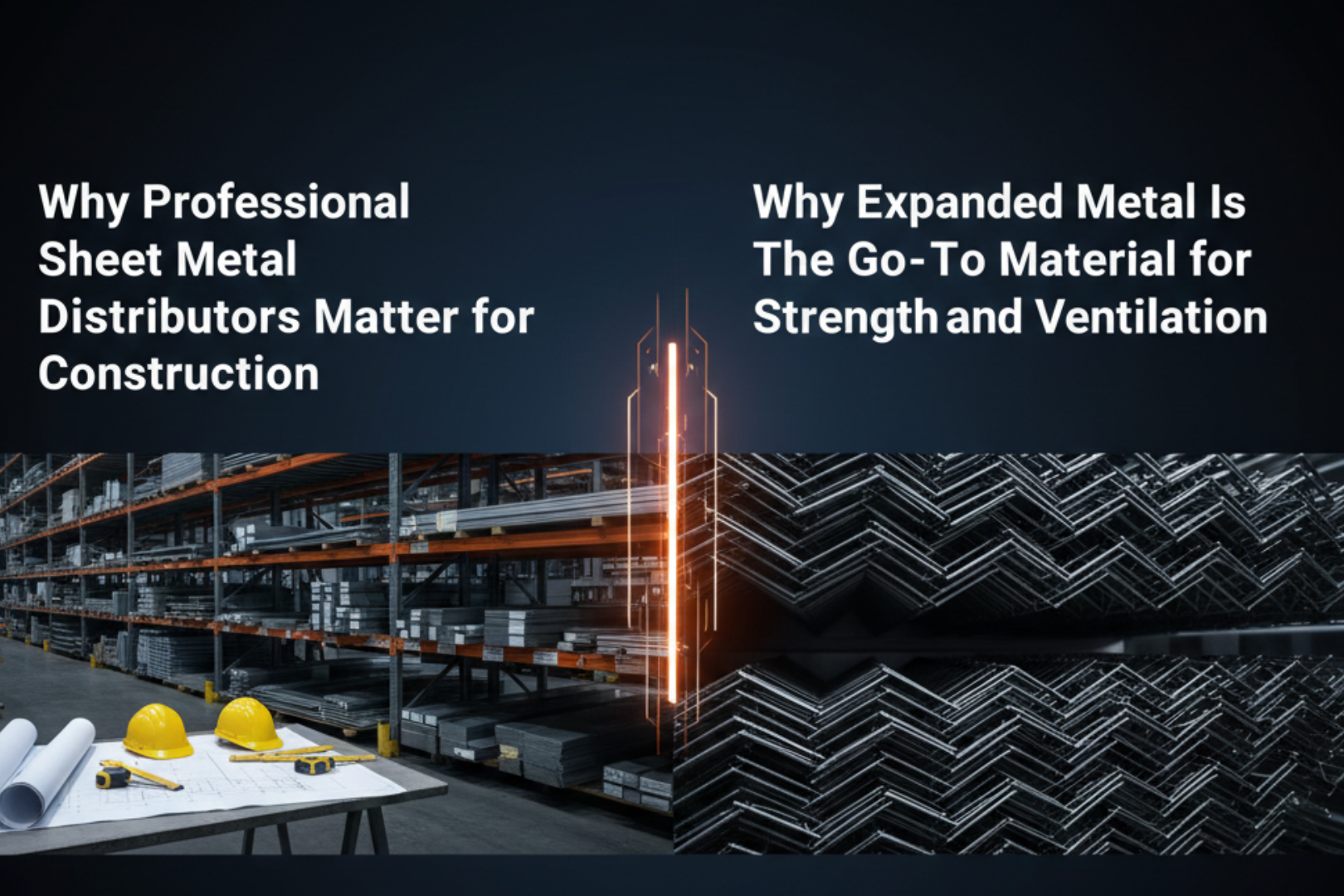
Some materials try to specialize. Expanded metal does not have to. Its effective design combines natural ventilation with structural strength. For this reason, expanded metal is frequently used in commercial, architectural, and industrial applications by engineers, contractors, and architects.
Expanded metal, which is made by cutting and stretching a solid sheet into a mesh pattern, produces a rigid, open structure without producing scrap. The end product strikes a balance between cost effectiveness, durability, and airflow.
Key Advantages of Expanded Metal
| Feature | How It Improves Strength | How It Enhances Ventilation | Added Project Value |
|---|---|---|---|
| Interconnected Mesh Structure | Distributes loads evenly across the sheet | Maintains open airflow without weak points | Long-lasting structural reliability |
| Raised Surface Pattern | Adds rigidity without extra thickness | Allows air and light to pass freely | Reduces material weight and cost |
| Slip-Resistant Texture | Improves safety for walkways and platforms | Prevents water and debris buildup | Safer working environments |
| Lightweight Design | Easier handling and installation | Supports open, breathable enclosures | Lower labor and structural load costs |
| Corrosion-Resistant Options | Performs in harsh environments | Suitable for indoor and outdoor ventilation | Minimal maintenance over time |
I. Built-In Structural Strength
Because of its continuous strand design, expanded metal becomes more rigid. Compared to many perforated or cut materials, the metal distributes stress more effectively because it stays connected. Without needless bulk, it accommodates impact, foot traffic, and equipment loads.
II. Natural Ventilation Without Compromise
The open mesh pattern improves airflow, heat dissipation, and visibility. It is frequently used for partitions, facades, ventilation screens, and equipment guards where security cannot be compromised, but airflow is essential.
III. Enhanced Safety
Expanded metal is perfect for industrial flooring, stair treads, and walkways because of its elevated texture, which increases traction. Slip hazards are decreased by the open design, which keeps debris and standing water from building up.
IV. Lightweight Efficiency
There is no material waste because expanded metal is stretched instead of punched. The reduced weight lowers overall structural demands and makes installation and transportation easier.
V. Long-Term Durability
Expanded metal is resistant to wear and corrosion and comes in steel, galvanized, and aluminum varieties. It requires little maintenance and operates dependably in both indoor and outdoor settings.
Summing Up
Expanded metal is special because it solves multiple issues at once. It improves ventilation, strengthens structures, improves safety, and reduces material waste. There are not many materials that can deliver that combination as well.
Ready to Source Quality Expanded Metal?
If your project demands dependable performance and a consistent supply, BobCo Metals is your trusted source for expanded metal. We provide high-quality materials, expert guidance, and reliable availability to keep your construction timelines on track.
Get expanded metal that is designed for strength, ventilation, and long-term durability by calling BobCo Metals at 866-267-8335 today to request a quote.
Frequently Asked Questions About Expanded Metal
1. What industries commonly use expanded metal?
Expanded metal is frequently used for walkways, guards, facades, and ventilation systems in industrial facilities, manufacturing, transportation, and architecture.
2. Is expanded metal strong enough for flooring applications?
Yes. When properly specified for gauge and strand size, expanded metal provides excellent load-bearing strength for walkways, platforms, and stair treads.
3. How does expanded metal improve ventilation?
Its open mesh structure allows air, heat, and light to pass through while still maintaining structural support and containment.
4. Can expanded metal be used outdoors?
Absolutely. Galvanized steel and aluminum expanded metal options are designed to resist corrosion and perform well in outdoor conditions.
5. Is expanded metal cost-effective compared to solid sheet metal?
In many applications, yes. Its strength-to-weight ratio and reduced material waste often lower overall project costs.


